Sinopsis
Series focusing on foreign affairs issues
Episodios
-
![Panamas Vanishing Islands]()
Panama's Vanishing Islands
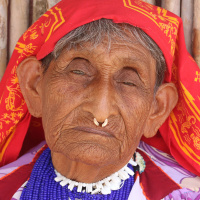
21/09/2017 Duración: 28minPanama's idyllic islands are threatened by a rising sea, but one community has a plan... The Guna Yala archipelago is made up of dozens of tiny, tropical, low-lying islands off the Caribbean coast of Panama. They are populated by the Guna people - Latin America's most fiercely independent, and many would say, most savvy, indigenous group. But the Guna are in trouble. Rising sea levels as a result of climate change, together with a growing population, threaten island life. The Guna aren't alone of course - millions of people around the globe could be displaced from coastal villages as the oceans envelop land in the coming decades. But unlike most vulnerable groups, the Guna of Gardi Sugdub island have a plan. They are intent on building a new community on the mainland, and re-locating. Could their efforts provide a model for other communities confronting climate displacement in the region, and even beyond? Photo Credit: Simon Maybin.
-
![Starting from Scratch in Uganda]()
Starting from Scratch in Uganda
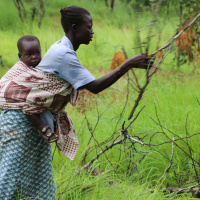
14/09/2017 Duración: 28minUganda has now taken in more than a million refugees who have fled civil war in neighbouring South Sudan. And more are coming every day. It's said that Uganda has the most generous refugee policy in the world, with new arrivals given land and allowed to work. But the majority of South Sudanese refugees are women and children who have lost almost everything and, as Ruth Alexander discovers, the reality of starting a new life from scratch is far from straightforward. Produced by John Murphy.
-
![Bulgaria on a Cliff Edge]()
Bulgaria on a Cliff Edge
07/09/2017 Duración: 28minWhat's it like to live in the country with the fastest-shrinking population in the world? In the mountain village of Kalotinsi in western Bulgaria, there is no shop, no school, no bus service. Until a few decades ago, 600 people lived here but now most of the houses stand empty. Thirteen residents remain, struggling to make a life in a place most people have given up on. There are many other near-deserted villages like this in Bulgaria. With women having few children, and many choosing to work abroad, Bulgaria is facing a population crisis. Ruth Alexander travels to the country to find out what life is like for those left behind, and to ask what is being done to reverse the population decline. Producer: John Murphy.
-
![Abdi in America]()
Abdi in America
31/08/2017 Duración: 28minA young Somali refugee struggles to live the American dream in the USA's whitest state, during the rise of Donald Trump. Is the dream still possible? In December 2014, in 'Abdi and the Golden Ticket,' the BBC's Leo Hornak followed Somali refugee Abdi Nor Iftin as he battled to make it to America through the US green card lottery. Since then, Abdi been trying to make a new life for himself in the US state of Maine, striving to become a 'real American'. He hopes to get educated and start a career, but the pressures of supporting a family in Mogadishu make this seem ever more difficult. And then there is the plan to have his brother Hassan join him. The state of Maine remains almost entirely white, and amid growing public fear of Muslims and immigration, Abdi's American dream runs into obstacles that he never expected. Using personal conversations and audio diaries recorded over three years, 'Abdi in America' documents the highs and lows of one man's struggle to become American. Producer - Michael Gallagher.
-
![The Sailors of Sevastopol]()
The Sailors of Sevastopol
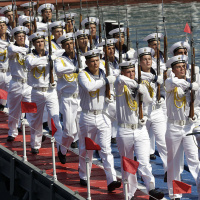
24/08/2017 Duración: 28minTim Whewell meets the sailors of Sevastopol. The Crimean coast of the Black Sea has such an allure that Russia risked the world's censure by seizing it from Ukraine in 2014. Home of the Black Sea fleet; seaway to the Middle East and spiritual heart of Russian orthodox Christianity, Crimea and it's naval port, Sevastopol, is a defining part of Russian identity. The Russian navy is now modernising and expanding its historic fleet so as to strengthen Moscow's campaign in Syria in support of President Assad, and against the so-called Islamic State. But what have been the costs of gaining this valuable prize? Producer: Monica Whitlock.
-
![Abkhazia - a Land Forgotten]()
Abkhazia - a Land Forgotten
17/08/2017 Duración: 28minIt's a state that most of the world says doesn't exist. But remote Abkhazia, on the far north-east shore of the Black Sea, has had the trappings of independence for a generation, since it broke away from Georgia in a short but brutal war. Foreign reporters rarely visit Abkhazia - but Tim Whewell gets there by horse-drawn wagon, as it's hard to cross the frontier by car. He finds a stunningly beautiful country still recovering physically and psychologically from the war, that's determined to preserve its independence and ancient culture - including a pagan religion built around animal sacrifices. But the price of statehood is deep isolation - and a future for many young people without opportunities. How long can this "frozen conflict" - and others around the Black Sea - continue? Producer, Monica Whitlock.
-
![Romanias Webcam Boom]()
Romania's Webcam Boom
10/08/2017 Duración: 29minInside Romania's live, web-camming world - the engine of the online sex industry... Crossing Continents explores the fastest growing sector of so-called, 'adult' entertainment. Locally, it's known as 'video-chat'. And in Romania there are thousands of women logging on, and in 'private' one-to-one sessions undressing (and more) for the international clients who pay to watch them. It is not sex work in the traditional sense - the relationships are virtual, there is no meeting or touching. Linda Pressly meets the women employed in studios and from home, and others with experience of this burgeoning industry.
-
![Last Call from Aleppo]()
Last Call from Aleppo
03/08/2017 Duración: 27minOn December the 14th last year the BBC's Mike Thomson awoke to a desperate voicemail message. It came from a frightened mother of three in besieged East Aleppo. Head teacher, Om Modar, who had been in regular contact with Mike, was pleading for help. Syrian government forces were closing in on the rebel-held area and bombs were falling around the shelter she shared with dozens of petrified children. Her voice, crackling with fear, said: "Please, please help us get out of Aleppo by safe corridor.....we are terrified.....please help us." That was the last Mike heard from Om. Months of silence followed. Finally, he became convinced she was dead. Then out of the blue came a two-line text. It revealed the fate of Om Modar and led Mike to near the Syrian border.
-
![Inside Transgender Pakistan]()
Inside Transgender Pakistan
27/07/2017 Duración: 28minPakistan is at a crossroads when it comes to gender identity. Kami calls herself Pakistan's first transgender supermodel. She's championing a new transgender identity in a country where there's a strict cultural code for people like her. It's the long established culture of the 'the third gender', also known as Khwaja Sira or Hijra. The community are celebrated as 'Gods chosen people' by many Pakistanis. But the reality is that many Hijras experience discrimination in daily life and complain that basic access to jobs, welfare and familial support is denied. For Kami and others like her this is no longer acceptable. Yet many Hijras shun the new transgender identity and believe it is alien to the established culture of the region. In their view, the very notion of a 'transgender woman' is wrong and could threaten the systems and structures that have provided support for Khwaja Siras for centuries. For Crossing Continents Mobeen Azhar meets Kami and Mani, one of the few openly transgender men in the country, and
-
![Banishing Americas Bad Hombres]()
Banishing America's 'Bad Hombres'
19/05/2017 Duración: 29minPresident Donald Trump has pledged to chase what he called the 'bad hombres' out of America. One of the organisations the President is targeting is the notorious Mara Salvatrucha gang, better known as MS-13 whose members deal in drugs, human smuggling and underage prostitution. They aggressively recruit young Latino immigrants in U.S. cities and suburban communities and have recently been responsible for a number of shockingly brutal murders, including the killing of two teenage girls with machetes and baseball bats. Lucy Ash travels to Long Island in New York and to Maryland to investigate. She asks what impact such crimes have on the heated debate about illegal border crossings and she asks if tougher immigration policies will really make America safe again.
-
![Elephants, Politics and Sri Lanka]()
Elephants, Politics and Sri Lanka
11/05/2017 Duración: 28minEvery year elephants kill dozens of people in Sri Lanka. Hundreds of these huge mammals are slaughtered too - often by farmers attempting to protect their land. For Crossing Continents, Linda Pressly travels to the east of the island - one of the regions devastated by over two decades of civil war. Thousands of people fled their homes during the fighting, and in their absence, the elephants moved in. With peace came resettlement, but many villages are now forced to negotiate a precarious existence with the wild herds, and death-by-elephant is not uncommon. Meanwhile, the government is attempting to take action against the illegal ownership of elephants, and prosecutions are in train. In Sri Lanka, elephants are a status symbol for the rich and powerful, and they are also highly revered in Buddhist culture - no pageant is complete without a slow-moving procession of elephants. But there are claims the confiscation of illegally-kept animals has created a shortage for religious rituals, and criticisms that the g
-
![Living with the Dead]()
Living with the Dead
04/05/2017 Duración: 28minSince the beginning of time, man has lived in awe and fear of death, and every culture has faced its mystery through intricate and often ancient rituals. Few, however, are as extreme as those of the Torajan people on the Indonesian island of Sulawesi. Here, the dead are a constant presence, with corpses often kept in family homes for many years. When funerals are eventually held, they don't mean goodbye. Once every couple of years, the dead are dug back out for a big family reunion. Is this a morbid obsession? Or could it be a positive way of dealing with the grief of losing a loved one? For Crossing Continents, Sahar Zand enters these remarkable communities where the dividing line between this world and the next is like a thin veil - a place with lessons for all of us. Exploring these traditions, Sahar seeks to understand the Torajan way of death and finds it changing her own thinking towards the loss of her own father. Producers Rebecca Henschke and Bob Howard.
-
![Wives Wanted in the Faroes]()
Wives Wanted in the Faroes
27/04/2017 Duración: 29minMen in the Faroe Islands are having to look far beyond their shores for marriage. The remote, windswept archipelago between Norway and Iceland, with close ties to Denmark, has seen an influx of women from South-East Asia who have come to marry Faroese men. In recent years the islands have been experiencing a declining population. Young women in particular have been leaving the islands, often for education, and not returning. One complaint from them is that their close-knit community has too conservative and masculine a culture where sheep farming, hunting and fishing are still dominant. For some women Faroese society is simply too small, too constraining. There are now approximately 2,000 fewer women of marriageable age in the total population of 50,000. In response, some men have been looking elsewhere for partners, from countries like Thailand and the Philippines. For Crossing Continents, Tim Ecott meets these foreign women adjusting to life in this isolated group of islands where the elements are harsh and
-
![Cubas Cancer Revolution]()
Cuba's Cancer Revolution
20/04/2017 Duración: 29minLung cancer is America's biggest cancer killer. But there is hope: the FDA (Food and Drug Administration) has sanctioned trials of CimaVax - a treatment created in Cuba that has extended the lives of hundreds of patients on the island. This is the first time a Cuban drug has been tested in the US. American cancer patients got wind of CimaVax five years ago. Patients like Judy Ingels - an American with a stage 4 lung cancer diagnosis - arrive regularly in Havana, hoping for a miracle. It's traffic that's increased since the US / Cuba thaw. The creation of Cuba's biotech industry was Fidel Castro's idea back in the 1980s. Today it employs 22,000 people, and sells drugs all over the world - excluding the US. When Presidents Obama and Castro made their momentous move to end hostilities, doctors and patients on both sides of the Florida Straits hoped everyone might benefit from an exchange of life-saving treatments. Now there's deep anxiety. Will President Trump re-freeze the thaw, and jeopardise a revolutionary c
-
![Coming Out of the Shadows in Kenya]()
Coming Out of the Shadows in Kenya
13/04/2017 Duración: 28minFor generations those who, for biological reasons, don't fit the usual male/female categories have faced violence and stigma in Kenya. Intersex people - as they are commonly known in Kenya - were traditionally seen as a bad omen bringing a curse upon their family and neighbours. Most were kept in hiding and many were killed at birth. But now a new generation of home-grown activists and medical experts are helping intersex people to come out into the open. They're rejecting the old idea that intersex people must choose a gender in infancy and stick to it and are calling on the government to instead grant them legal recognition. BBC Africa's Health Correspondent Anne Soy meets some of the rural families struggling to find acceptance for their intersex children and witnesses the efforts health workers and activists are making to promote understanding of the condition. She also meets a successful gospel singer who recently came out as intersex and hears from those who see the campaign for inter-sex recognition as
-
![Hong Kongs Secret Dwellings]()
Hong Kong's Secret Dwellings
06/04/2017 Duración: 28minLast summer the emergency services rescued two children from an out-of-control fire in an old industrial building in the commercial area of Hong Kong. It was discovered that a number of people were living in the building. Charlotte McDonald explores the reasons which would drive a family in one of the wealthiest cities in the world to live illegally in a place not fit for human habitation. It's estimated that around 10,000 people live in industrial buildings - although the true number is not known due to the very fact it is not legal. Hong Kong consistently ranks as one of the most expensive places to rent or buy in the world. Already around 200,000 have been forced to rent in what are known as subdivided flats. But now attention has turned to those in even more dire conditions in industrial blocks. From poor government planning, the loss of industry to mainland China and exploitative landlords, we uncover why people are choosing to live in secrecy in neglected buildings. Charlotte McDonald reporting Alex Bur
-
![Brazils modern-day Captains of the Sands]()
Brazil's modern-day Captains of the Sands
31/03/2017 Duración: 28minEighty years ago, the Brazilian writer Jorge Amado published Captains of the Sands, a powerfully moving novel about the lives of a gang of orphaned children living on the streets of Salvador. The book had a huge impact, showing wealthy Brazilians the truth about the inequality in their country and the humanity of the children they were used to regarding as "pests". It is now a literary classic and read by almost every Brazilian child at school. Eighty years on, though, thousands of adolescents and children still live in the streets in Salvador. Their lives are still marked by poverty and crime, intensified since Amado's day by the growth of the drugs trade and the addiction and violence it brings. And they still find alternative bonds of family in the kind of gangs that Amado would have recognised. For Crossing Continents, David Baker meets these modern-day Captains of the Sands and hears their stories and those of the people trying to help them. James Fletcher producing.
-
![Russias Extreme Selfie Daredevils]()
Russia's Extreme Selfie Daredevils
23/03/2017 Duración: 29minYoung Russians have gained a reputation on social media for taking the most extreme selfies, often involving death-defying stunts on top of skyscrapers, all for the sake of internet fame. Lucy Ash travels from Moscow to Siberia to meet some of this trend's most high-profile figures. They explain how they are building themselves into living brands, and the ways they can make money out of their risky roof-top photographs. They reveal what initially motivated them to chance their lives in this way - and an indifference to the rising number of selfie-related deaths in Russia. The government is less nonchalant though. and around 18 months ago it launched a 'safe selfie' campaign, to warn young people of the risks of taking photos in moving traffic, on top of radio towers, with loaded weapons or with wild animals. But why has this phenomenon taken root in Russia? Crossing Continents reveals how a mixture of provincial malaise, a misdirected sense of masculinity, and lax law enforcement has allowed extreme selfie cu
-
![Siege at the Holey Artisan Bakery]()
Siege at the Holey Artisan Bakery
12/01/2017 Duración: 28minOn the night of the 1st July 2016, five young Bangladeshi Islamist militants stormed a Dhaka restaurant popular with foreign residents and visitors. The siege at the Holey Artisan Bakery was an unprecedented attack in Bangladesh. 29 people lost their lives that night - the majority of them non-Bangladeshis, shot or butchered with machetes. But not everyone was killed. For Crossing Continents, Linda Pressly together with local journalist, Morshed Ali Khan, tell the story of what happened inside the restaurant over 11 hours - the chef forced to cook sea bass by the killers, the kitchen worker locked for hours in a single toilet cubicle with 7 other people. There are tales of escape and resistance. Above all, there is courage amidst the carnage, and in the face of bloody adversity.(Photo L to R: Delwar Hossain, Sumon Rezar, Shishir Sarker. Credit: Linda Pressly/BBC copyright)
-
![Poland: Behind the Black Protests]()
Poland: Behind the Black Protests
05/01/2017 Duración: 28minThousands of women - and men - took to the streets in Poland recently in protest against attempts to ban all abortions-and the issue seems to have crystallised a growing unease with the country's move to the right and the power of the Catholic Church. 'We are not putting our umbrellas away' went one of the slogans as women stood in the pouring rain to voice their concerns. The size of the protest surprised even the participants; organised by the feminist movement, it attracted women and men from many different backgrounds. Where did this surge of activism come from? Some argue that the revolution that began with Solidarnosc in the 1980s ignored the needs and voices of Polish women. Communism may have been defeated, they say, but it's been replaced by a different kind of repression. Maria Margaronis investigates. Mark Savage producing.